Teaching Social Media & Digital Platforms in High School – Building Media Literacy for the Digital Age
Introduction
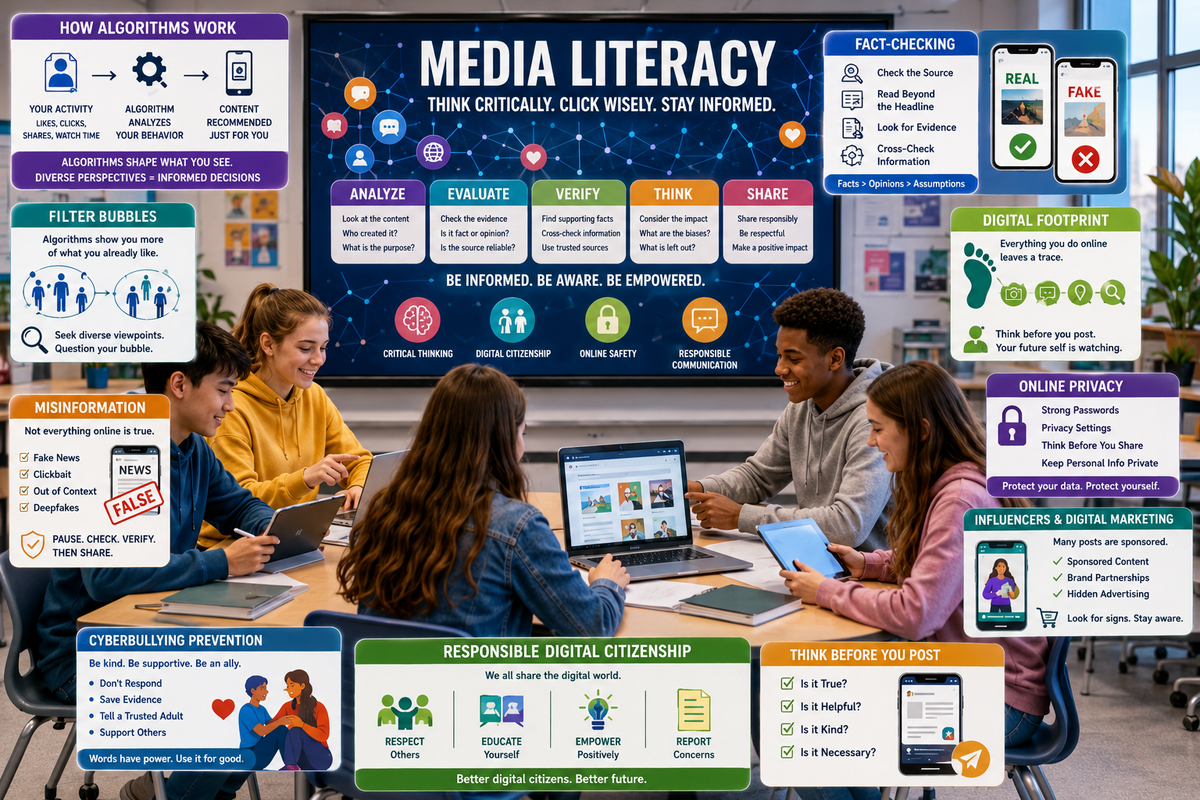
Social media has become one of the most influential environments in young people's lives. Platforms shape communication, news consumption, identity, entertainment, learning, and even political participation. For teachers, this creates an important opportunity: helping students become thoughtful, critical, and responsible digital citizens rather than passive consumers of online content.
Die im Text erwähnten Unterrichtsmaterialien auf einen Blick. Digitaler Download, sofort einsetzbar.

A modern media literacy unit should move beyond teaching students how to use technology. Instead, it should help them understand how digital platforms influence behavior, opinions, and decision-making.
Why Teach Social Media Literacy?
Media literacy is now considered an essential 21st-century skill. Students encounter thousands of digital messages every day, making it increasingly important to evaluate sources, identify misinformation, recognize persuasive techniques, and understand how recommendation systems influence what they see online.
- develop critical thinking
- strengthen digital citizenship
- identify misinformation and fake news
- understand algorithms and recommendation systems
- recognize online manipulation
- promote responsible digital behavior
Key Concepts Students Should Understand
How Social Media Platforms Work
Students should explore how platforms prioritize content, collect user data, and personalize recommendations through algorithms. Understanding these systems helps explain why different users experience completely different online environments.
Algorithms and Filter Bubbles
Recommendation algorithms often reinforce existing interests and opinions. Classroom discussions can examine how filter bubbles and echo chambers influence political views, purchasing decisions, and social interactions.
Misinformation and Disinformation
Students should learn practical strategies for verifying sources, checking evidence, evaluating credibility, and recognizing emotionally manipulative content before sharing information online.
Influencers and Digital Marketing
Many students consume sponsored content without recognizing advertising strategies. Analyzing influencer marketing helps learners identify persuasive techniques and commercial interests behind social media content.
Engaging Classroom Activities
Activity 1: Fact or Fake?
Provide students with authentic social media posts and ask them to investigate whether each claim is supported by reliable evidence.
Activity 2: Understanding Algorithms
Students compare different social media feeds and discuss why identical searches may produce different recommendations.
Activity 3: Influencer Analysis
Learners investigate sponsored posts, identify persuasive language, and evaluate transparency in influencer marketing.
Activity 4: Digital Debate
Students debate questions such as:
- Should social media companies regulate misinformation?
- Should teenagers have stronger privacy protections?
- Can artificial intelligence improve online safety?
Suggested Unit Structure
Lesson 1
- Introduction to social media ecosystems
- Digital footprints
- Online identity
Lesson 2
- Algorithms
- Recommendation systems
- Filter bubbles
Lesson 3
- Media bias
- Misinformation
- Fact-checking
Lesson 4
- Influencer culture
- Digital advertising
- Consumer awareness
Lesson 5
- Online ethics
- Privacy
- Digital citizenship
Skills Students Develop
- critical thinking
- media evaluation
- source analysis
- digital communication
- collaboration
- ethical reasoning
- problem solving
- responsible online participation
Differentiation Ideas
- case studies
- collaborative investigations
- project-based learning
- debates
- digital storytelling
- multimedia presentations
Common Student Misconceptions
Students often assume that the most popular information is also the most reliable. Many are also unaware that algorithms personalize content based on previous online behavior rather than presenting neutral information.
Cross-Curricular Connections
- English Language Arts
- Civics
- Social Studies
- Digital Literacy
- Computer Science
- Psychology
Recommended Classroom Resource
For a complete, ready-to-use unit, explore:
Social Media & Digital Platforms – Media Literacy High School Unit
The unit includes structured lessons, engaging classroom activities, critical thinking tasks, collaborative projects, discussion prompts, assessments, and teacher guidance designed specifically for secondary classrooms.
More High School Resources
- Music, Protest & Social Criticism
- Perception Through Music & Media
- Music, Sampling & Intertextuality
Frequently Asked Questions
Why is media literacy important in high school?
Students increasingly rely on digital platforms for information. Media literacy helps them evaluate sources, recognize misinformation, and make informed decisions. :contentReference[oaicite:1]{index=1}
What skills does a media literacy unit develop?
Students strengthen critical thinking, digital citizenship, source evaluation, online communication, ethical reasoning, and responsible participation in digital communities.
How can teachers make media literacy engaging?
Authentic social media examples, debates, fact-checking activities, collaborative investigations, and project-based learning create meaningful classroom experiences.
Is media literacy relevant across subjects?
Yes. It supports English, Social Studies, Civics, Computer Science, Psychology, and interdisciplinary project-based learning.
Conclusion
Teaching media literacy is no longer optional—it is an essential part of preparing students for life in a digital society. By helping learners understand algorithms, misinformation, digital advertising, and responsible online behavior, educators empower students to become thoughtful, informed, and ethical participants in today's connected world.
Explore more ready-to-use high school teaching resources at stifo.de to bring engaging, relevant digital literacy lessons into your classroom.
Das ganze Fach Englisch in einer Reihe
Einzelne Unterrichtsreihen decken ein Thema ab. Die FachKomplett-Reihe Englisch bündelt das Material für das gesamte Fach - einmal kaufen statt jedes Thema einzeln zusammenzusuchen.
 FachKomplett Englisch – 100+ Unterrichtsreihen einsatzbereit für den Englisch...
€99,90Zur Reihe
FachKomplett Englisch – 100+ Unterrichtsreihen einsatzbereit für den Englisch...
€99,90Zur Reihe
- Alle zentralen Themen des Fachs in einem Paket
- Arbeitsblätter mit Lösungen, Präsentationen und Verlaufsplänen
- Editierbare Formate, damit du an deine Lerngruppe anpassen kannst
- Deutlich günstiger als die enthaltenen Reihen einzeln
Luca beschäftigt sich seit Jahren intensiv mit der Frage, was guten Unterricht ausmacht - und wie Lehrkräfte dabei wirklich entlastet werden können. Als Gründer von stifo.de entwickelt er strukturierte Unterrichtsmaterialien, die Lehrerinnen und Lehrer im Alltag spürbar unterstützen: durchdacht aufgebaut, direkt einsetzbar und didaktisch solide.
Das könnte dich auch interessieren
 englischCharacterisation and Analysing Fiction: als Ergänzung zum Lehrmittel
Characterisation and Analysing Fiction lässt sich als Ergänzung zum Englisch-Lehrmittel einse...
19.09.2026
englischCharacterisation and Analysing Fiction: als Ergänzung zum Lehrmittel
Characterisation and Analysing Fiction lässt sich als Ergänzung zum Englisch-Lehrmittel einse...
19.09.2026
 englischAnalysewortschatz und Operatoren für die Textanalyse — neben dem Lehrmitt...
Analysewortschatz und Operatoren für die Textanalyse lassen sich gezielt neben einem Englisch...
19.09.2026
englischAnalysewortschatz und Operatoren für die Textanalyse — neben dem Lehrmitt...
Analysewortschatz und Operatoren für die Textanalyse lassen sich gezielt neben einem Englisch...
19.09.2026
FAQ zu den Unterrichtsmaterialien
Das Sortiment reicht von der Kita über die Grundschule und die Sekundarstufe I (Klasse 5–10) bis zur Sekundarstufe II und zur Berufsschule. Jedes Material ist nach Fach, Stufe und - wo sinnvoll - nach Bundesland beschriftet.
Viele Reihen lassen sich mit kleinen Anpassungen auch in benachbarten Schulformen einsetzen, weil die Aufgaben in mehreren Anforderungsniveaus vorliegen.
Eine vollständige Reihe enthält in der Regel:
- mehrere Arbeitsblätter mit ausgearbeiteten Lösungen
- eine Präsentation für den Unterrichtseinstieg
- einen Verlaufsplan für die Stundenstruktur
- Aufgaben auf mehreren Anforderungsniveaus zur Differenzierung
- je nach Reihe Klausur- oder Testvorlagen
Die Dateien liegen in editierbaren Formaten vor, damit du Inhalte an deine Lerngruppe anpassen kannst.
Direkt nach dem Kauf erhältst du eine Bestätigungs-E-Mail mit dem Download-Link. Zusätzlich liegen die Dateien dauerhaft in deinem Kundenkonto unter „Bestellungen" - ohne Ablaufdatum und ohne Downloadlimit.
Es gibt keinen Versand und keine Wartezeit: Der Download steht unmittelbar nach dem Abschluss der Bestellung bereit.
Die Einzellizenz gilt für eine Lehrkraft. Du darfst das Material ausdrucken und im eigenen Unterricht beliebig oft einsetzen. Die digitalen Dateien an andere Lehrkräfte weiterzugeben oder sie zu veröffentlichen, ist davon nicht gedeckt.
Für Fachschaften gibt es bei vielen Produkten eine Schullizenz, die mehrere Lehrkräfte einer Schule abdeckt. Sie steht direkt auf der Produktseite zur Auswahl.
Eine Unterrichtsreihe deckt ein einzelnes Thema ab, etwa „Genetik" oder „Kurzgeschichten analysieren". Sie passt, wenn du gezielt eine Sequenz vorbereitest.
Ein FachKomplett-Paket bündelt die zentralen Themen eines ganzen Fachs zu einem Gesamtpreis, der deutlich unter der Summe der Einzelreihen liegt. Das lohnt sich, sobald du ein Fach dauerhaft unterrichtest. Für Englisch findest du die Reihe hier.
Die Materialien orientieren sich an den veröffentlichten Vorgaben der Länder - je nach Bundesland am Kernlehrplan, Kerncurriculum, Bildungsplan, Rahmenlehrplan oder an den Fachanforderungen. Für viele Fächer gibt es eigene Pakete je Bundesland.
Eine Prüfung, Zulassung oder Empfehlung durch ein Ministerium besteht nicht. Da die Vorgaben zwischen den Ländern abweichen, lohnt sich vor dem Einsatz ein kurzer Abgleich mit dem schulinternen Lehrplan.
Kommentare
Kommentar hinterlassen
Kommentare werden vor der Veröffentlichung geprüft.
Unterrichtstipps per E-Mail
Neue Materialien, Planungshilfen und Hinweise zu Lehrplanänderungen - etwa zweimal im Monat, ohne Werbeflut.